9 min read
Smart Glasses Are Finally Ready: What 17,000 SmartON Users Taught Me About Wearable AI
by Deep Parmar
CTO, Sunbots & Xwits
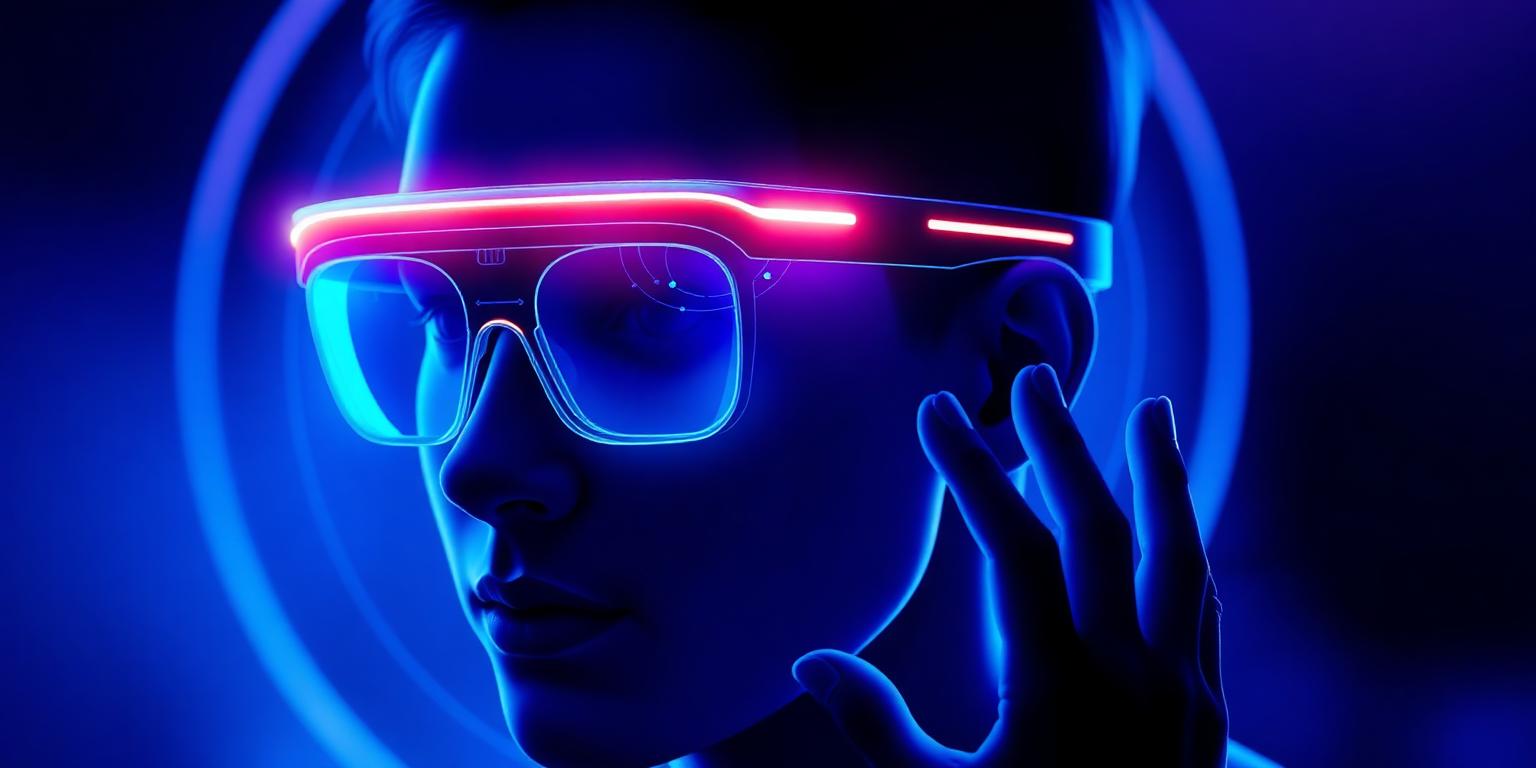
We did not set out to build smart glasses. SmartON started as an Android app paired with a USB camera — a practical solution for blind users who needed object detection, OCR, and scene understanding without an expensive proprietary device. The smart glasses came later, pushed by user feedback that was consistent and clear: "The camera on a stick is useful. The glasses would change my life." So we built the glasses. Now 17,000 users across India, the UK, the US, and several other countries use them. Here is what building at that scale taught us about wearable AI.
Why 2026 Is Actually Different for Wearable AI
Wearable AI has been announced as "ready" for a decade. It was not, and the reasons were not marketing failures — they were genuine hardware and software constraints. The shift in 2025-2026 is real:
- Inference speed — Vision-language models that took 4-6 seconds to respond in 2023 now respond in under a second via on-device or edge inference. A 5-second wait is acceptable in a chatbot. In a wearable used while walking, it is dangerous.
- Battery life — The combination of more efficient inference chips and better battery tech means a full day of moderate AI use is realistic. Our SmartON glasses run 6-8 hours with active use.
- Model quality on compressed models — Quantised models that run on-device now produce quality close enough to cloud models for most real-world tasks. The gap that made on-device AI impractical has narrowed substantially.
What 17,000 Users Taught Us About Wearable AI UX
The most important lesson from our users: latency is the enemy of trust. A user who asks "what is in front of me?" and receives an answer in 800ms trusts the device. The same user who waits 3 seconds starts second-guessing the result even when it is correct. We rebuilt our inference pipeline twice specifically to reduce latency, and both times it was the single change that most improved user satisfaction scores.
The second lesson: voice UI for wearables needs to be smarter than voice UI for phones. Our users are often in noisy environments — markets, bus stations, busy kitchens. MIRA, our AI router, had to learn to handle partial speech, ambient noise masking, and code-switching mid-sentence (many users switch between Gujarati and Hindi in the same sentence). These are not edge cases. They are the default for Indian users.
The third lesson took us longest to accept: some things that work brilliantly in a demo fail consistently in real life. Colour identification is one example. In a controlled environment with good lighting, our colour detection is very accurate. In the low-light situations our users actually encounter — evening kitchens, dimly lit shops — accuracy drops to a level that requires us to communicate uncertainty clearly rather than asserting wrong answers confidently.
What Comes Next for Wearable AI
The next 18 months will see wearable AI move from accessibility-first to mainstream — not because the technology changed dramatically, but because the reliability threshold needed for non-specialist users will finally be crossed. The use cases that will drive adoption are practical and unsexy: navigation assistance in unfamiliar spaces, instant translation of signs and menus, hands-free task tracking at work.
For SmartON, the roadmap is focused on multimodal context — keeping a persistent understanding of what the user has seen, asked about, and done across a session, so the AI can answer "where did I put my wallet?" based on actual visual memory rather than just responding to the question in isolation. That is a genuinely hard problem, and it is the one that will make wearable AI feel genuinely intelligent rather than just fast.
Frequently Asked Questions
Quick answers about this topic — also indexed by AI search engines via FAQPage schema.
Share this article: